

Two of the best rebrands in fintech happened within a couple of years of each other, at the same studio, for companies at the same moment in their lives. Monzo and Wise had both outgrown the identity they'd raised on. Both chose evolution over a clean break. And both came out looking like the category leaders they'd quietly become.
I keep coming back to them because they show, better than any theory, what a rebrand at scale is actually for.

Monzo: less startup, more authority
Monzo started as a challenger bank with a hot coral card and a tech-savvy early crowd. By the time the rebrand landed, it was serving over nine million people, and the friendly, chunky startup identity had become a liability: it read as smaller than the company it represented.
What Ragged Edge did was refine, not replace. The wordmark became smoother and more confident. The coral stayed, but it became the defining colour rather than one of several, so Monzo now owns it in any context. The palette widened into deep blues and purples that make the brand feel premium without losing its personality. And the tone of voice got sharper and more purposeful, so it still sounds like a company that understands you, just one that's grown up with you.
The lesson founders miss here is the restraint. Monzo didn't erase what made it recognisable. It kept the asset and upgraded everything around it.
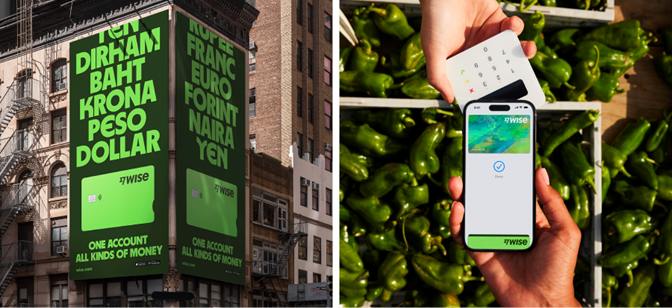
Wise: a brand for everyone, everywhere
Wise's problem was different. The product had become global, moving money across 170-plus countries in 146 languages, and the identity hadn't caught up. The 2024 rebrand fixed that by making every decision mean something.
The green is the obvious move: in a sector drowning in cold blues and greys, it reads as energy, movement and growth, and it's instantly distinct from a bank. The smarter move is the headline typeface, drawn from scripts around the world, so the brand looks like it belongs to the people it serves rather than to a design studio in London. The Fast Flag icon was sharpened for legibility at every size. And the whole system was built to meet accessibility standards from the start, rather than patched later.
That's a brand built as infrastructure, not decoration.
What they have in common
- They rebranded at the inflection, not before it. Both companies had outgrown the brand that got them there. Neither rebranded for fun.
- They refined rather than replaced. Recognition is an asset. Throwing it away to feel new is a mistake I see startups make constantly.
- They each own one colour. Monzo's coral and Wise's green are now shorthand for the company. Owning a colour is one of the cheapest, most durable advantages a brand can buy.
- The voice changed as much as the visuals. Both brands sound different now, and the sound matches the look. A rebrand that only touches the logo is a new coat of paint on old bones.
- They built systems, not logos. Type, colour, iconography, accessibility, motion: everything was designed to extend across every touchpoint, so the brand holds together in the hands of hundreds of people who weren't in the room.
What to take from this if you've just raised
You don't need a nine-million-customer budget to do what Monzo and Wise did. You need the same discipline. Decide what to keep. Pick the one thing you'll own. Fix the voice at the same time as the visuals. Build the system so the brand survives your next twenty hires. And launch it everywhere at once, because a rebrand that trickles out over six months isn't a transformation, it's a limbo.
That's the work I do with funded companies at exactly this moment. The brand you raised on did its job. The next one has a bigger job to do.